Nyhet
Students and Power in Egypt

Among them are the former Vice President of The Egyptian student union Amr El Helw, the Secretary General of Egypt’s student movement Amr Khattab and other student union leaders (1). This escalation comes amid increasing repression against any voice of opposition the Egyptian dictator Abdel Fattah El-sisi. The past few months have seen the arrest of the former chief officer of the Egyptian army Sami Anan who stood for elections against the dictator as well as the arrest of former presidential candidate and the president of the opposition party “Strong Egypt” AbdelMonem Aboelfotoh. (2) (3)
The revolution and the students When the Egyptian revolution sparked in 2011, the Egyptian students were at its heart. The participation of the students was not organized as 60 years of military dictatorship has destroyed all possible attempts from students to organize themselves. But I participated in the demonstrations against Mubarak’s dictatorship just like the rest of the students.
Mubarak, the president, was forced to leave office after a sit-in that which lasted over 18 days and demonstrations all over the country. We left Tahrir Square knowing that the revolution had not ended yet. We have cut the snake’s head, but its tail was still moving all over the country. We inherited a huge corrupt regime following sixty years of military dictators. A regime with representatives in every inch of the country.
There was a kind of agreement between us activists that the best way to change the regime and continue our revolution was for everyone to try to change the regime on a micro level. Every worker in his factory and every student on his university.
Some friends and I decided to found a new student organization that aimed to protect the academic freedoms and emphasize free education. Through the following years, this organization has inspired hundreds of students to join and we have achieved many victories. But our impact was limited to our university. We used to bet that other students would do the same in other universities as that would be the only chance for us to achieve something on the macro level. I think we won this bet.
The student union elections and the falling of Muslim Brotherhood After the Muslim Brotherhood won the presidency and the parliament majority in the elections that took place after Mubarak left, we saw many signs that they were trying to establish a new dictatorship on a religious basis. It started with the president breaking his promise to write a consensus constitution, and ended with the constitutional declaration that aimed to make the president control the judiciary.
The student union’s elections were held in this period. These elections take place on three levels. First, all the students vote for their faculty student union. Then, the winner in each faculty choose the university’s student union. Finally, the winners of all the universities meet to choose the national student union board. Because of this complicated system there was no chance the opposition would win. Student organizations like ours were not strong enough to organize the students all over the country. Everyone thought it was another guaranteed win for the Muslim Brotherhood students, as they had the experience and resources to win elections. However, when the elections day came, our electoral alliance won both the president and the vice president of the university student union. On the national level we were able to win the president of the Egyptian students’ union seat. However, the Muslim Brotherhood students managed to win the vice president seat as the elections system on the national level gives more opportunities for those who are well-organized even if they had small percentage of the popular student votes.
Our win was the beginning of the end of the Muslim Brotherhood regime. We debunked the legend that says it’s impossible to beat the Muslim Brotherhood in democratic elections. We provided a democratic experiment, which showed the wider society how the civil movement could overthrow the Muslim Brotherhood with democracy (4). Later, we also provided the wider society proof that Muslim brotherhood students could work side by side with other students from all over the political spectrum. This was something politicians who ruled the country could not do.
The Students and the coup The ruling of the Muslim Brotherhood rapidly came to an end when millions of Egyptians went to the streets on 30 June 2013 to demand an early presidential election. The Minister of Defense organized a coup and won the support of the civil opposition parties.
The revolution was thought to be dead on the day of the coup, but universities were the last revolutionary fortresses to fall. In August 2013 the regime committed the massacre of Rabea, where more than 1000 supporters of the Muslim Brotherhood were killed. Since then the regime has led a campaign against any opposition voices. The campaign has reached civil society organizations, independent media outlets, journalists, and finally students activists.
After the military coup the universities were the only place where people could hear a voice of opposition for several months. But the regime shut the students down with expelling, arresting, and even killing student activists, for instance the Italian scholar Giulio Regeni was found dead on Cairo while he was working on his thesis about labour unions, later the police admitted that Regeni was under the police surveillance and till now all the evidence suggest that the police was involved in his tragic death. (5) (6) (7)
Despite this, the student movement has resisted until the end. In 2015 the regime thought that it had full control of universities. The minister of higher education decided to organize the first student union elections since the coup. The state supported a newly-made student organization with funds and media coverage, but the independent students managed to win again. The outcome bothered the state to the extent that they did not recognize the result of the elections which they had organized and supervised themselves.
The student union elections were cancelled in 2016 and in 2017. Internal regulations were changed to prevent students from forming a national student union, and limited the authority that the student unions have on the university level. On February 2018 the “Strong Egypt” student movement has announced that they have frozen all of their activities as “the current situation is not safe for peaceful activism”, after the Secretary general of the movement was listed as a terrorist along with other student activists.
Egypt today is facing many problems such as terrorism, dictatorship, and human rights violations. I believe that the only solution to each problem is education, and of course education is useless without academic freedoms. Maybe the continuous oppression of student movement has finally succeeded and the freezing of “Strong Egypt” student movement is a declaration of surrender. Maybe it is just a temporary break and the student movement will flourish again from the ashes. But the sure thing is that we, students, have proven to the whole of society that we are more insightful and efficient than most politicians. A lesson where we have given broader society a lesson about democracy and the peaceful trading of power.
(1) Ali, M. (2018). 4 students leaders on the terrorism list (in Arabic 4 قيادات طلابية على قوائم الإرهاب). Shbabbek.com. Retrieved 19 March 2018, from http://shbabbek.com/show/137498
(2) Michaelson, R. (2018). Egypt arrests ex-general who stood for election against Sisi. the Guardian. Retrieved 19 March 2018, from https://www.theguardian.com/world/2018/jan/23/former-egyptian-general-arrested-by-military-after-announcing-presidential-bid-sami-anan
(3) Streets, E. (2018). Former Presidential Candidate Abdel Moneim Aboul Fotouh Detained for 15 Days in Prison. Egyptian Streets. Retrieved 19 March 2018, from https://egyptianstreets.com/2018/02/14/former-presidential-candidate-abdel-moneim-aboul-fotouh-arrested/
(4) The egyptian media use the expression civil movement to describe all the political actors who neither belong to the Army nor the islamist parties
(5) Rollins, T. (2013). Egyptian Police Are Accusing Students of Being Islamists and Killing Them. Vice. Retrieved 19 March 2018, from https://www.vice.com/sv/article/nnqb38/egyptian-police-are-falsely-accusing-students-as-islamists-and-killing-them
(6) Nagy, Mohamed, et al. Besieged Universities . SAIH, AFTE, 2017, Besieged Universities , saih.no/english/article/2017/3/alvorlige-brudd-studenters-rettigheter-i-egypt.
(7) Italian student was killed ‘for researching Egypt unions’. (2018). the Guardian. Retrieved 19 March 2018, from https://www.theguardian.com/world/2018/jan/25/italian-student-killed-for-researching-egypt-unions-giulio-regeni
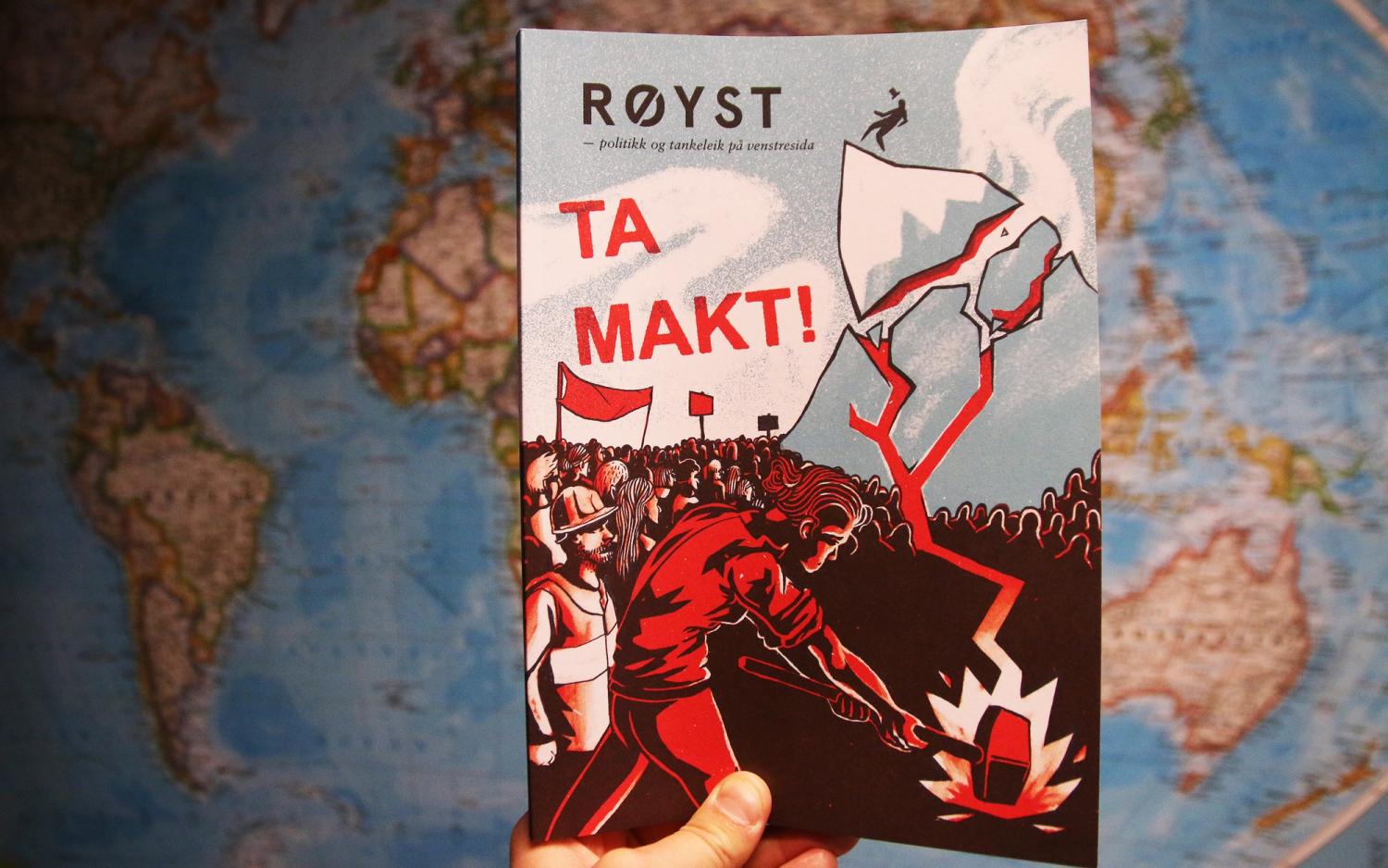
This text was originally published in Røyst #9, 2018. www.røyst.no
Nyheter som engasjerer i kampen for utdanningsrettferdighet

Nyhet
Arbeiderpartiet raserer norsk utdanningsbistand
Regjeringen sier at «arbeid for alle» skal være jobb nummer én i utviklingspolitikken. Samtidig fortsetter Arbeiderpartiet å kutte i støtten til utdanning, en av de viktigste forutsetningene for både arbeid og utvikling.

Nyhet
Utveksling for unge forskere: Kampen mot antirettighetsbevegelser
SAIH søker to unge forskere med interesse for sosial rettferdighet og påvirkningsarbeid til et ettårig internasjonalt utvekslingsprosjekt i Norge, Sør-Afrika og Thailand.


Nyhet
Leder i SAIH for en dag
Har du lyst til å teste hvordan det er å lede en organisasjon, møte politikere og være med på å påvirke saker som betyr noe? På OD-dagen søker vi en elev i videregående skole som får ta over som leder i SAIH for en dag.

Nyhet
Afghanistanuka 2026: Hvordan holde høyere utdanning i live i Afghanistan?
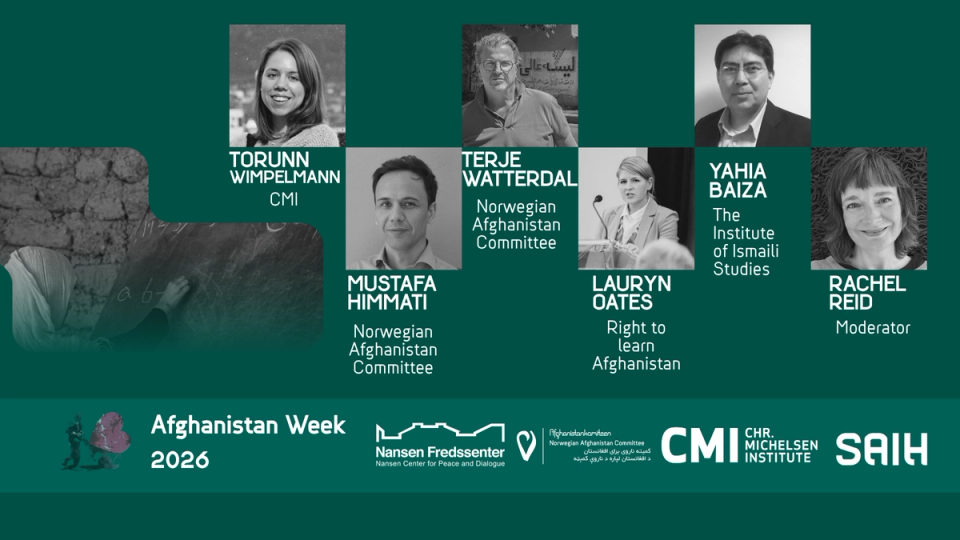
Som en del av Afghanistan Uka 2026 inviterer SAIH og Afghanistankomiteen til et seminar om hvordan høyere utdanning kan holdes i live for kvinner i Afghanistan. Bli med på Kulturhuset 28. oktober, 10:30-12:00. Meld deg på her.

Nyhet
Ragebait fra KrFU?
En stor del av meg håper nesten det er det, for hvis de faktisk mener hatparagrafen må bort, er det langt mer alvorlig.


Nyhet
65 år, 17 stopp og en hel masse studentengasjement
Etter to uker på jubileumsturné sitter vi igjen med ett tydelig inntrykk: studentsolidariteten lever i beste velgående.